
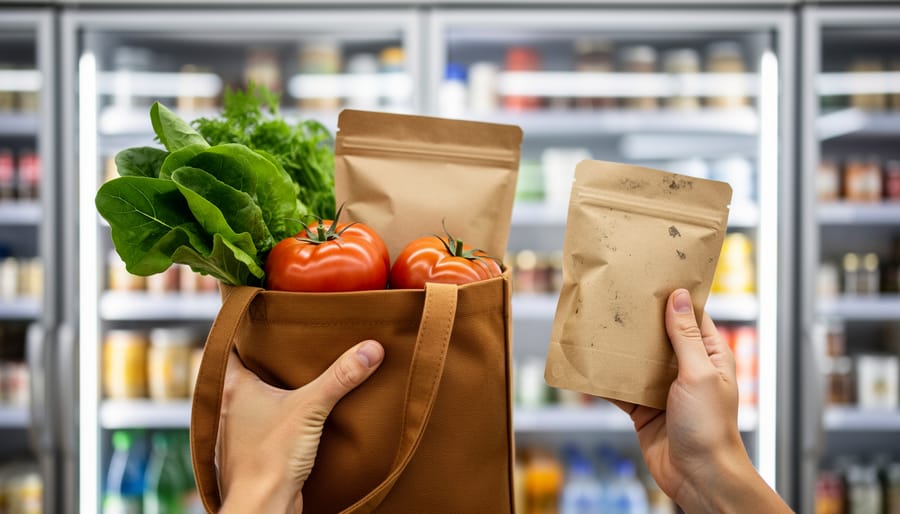

Consumer smarts means making purchasing decisions that protect both your budget and the planet, and it starts with three core skills: reading labels critically, timing your purchases strategically, and connecting with local food networks that prioritize transparency over marketing spin.
The grocery store has become a minefield of misleading claims. Products stamped with vague terms like “natural” or “eco-friendly” crowd the shelves, designed to capture your dollars without delivering genuine environmental benefits. Meanwhile, truly sustainable options often sit unnoticed because they lack flashy packaging or don’t fit conventional shopping habits. The gap between what companies promise and what they deliver has never been wider, and closing that gap requires a sharper eye and a willingness to question the narratives we’ve been sold.
Being a smart consumer in 2026 doesn’t require a degree in environmental science or an unlimited grocery budget. It means understanding which certifications actually hold weight, knowing when seasonal produce hits peak affordability, and building relationships with farmers’ markets and community-supported agriculture programs where you can ask direct questions about growing practices. These strategies work because they bypass the marketing departments and connect you with verifiable information.
The most effective approach combines individual awareness with collective action. Shopping cooperatives, buying clubs, and neighborhood food swaps create systems where knowledge spreads naturally and purchasing power grows through collaboration. When you learn to spot greenwashing alongside a group of equally motivated shoppers, everyone benefits from shared expertise and nobody has to figure it all out alone.
Reading Between the Labels: What Actually Makes Food Sustainable
Walking through the grocery store, you’ll see dozens of labels competing for your attention. “Eco-friendly,” “all-natural,” “sustainably sourced”, the claims pile up until shopping feels like decoding a foreign language. The good news is that once you know what to look for, these labels become tools rather than obstacles.
Certifications offer your most reliable shortcuts. Unlike vague marketing phrases, legitimate certifications require third-party verification and specific standards. Here are the ones worth your attention:
- USDA Organic: No synthetic pesticides or fertilizers, supports soil health and biodiversity
- Fair Trade Certified: Ensures fair wages and safe working conditions for farmers and workers
- Regenerative Organic Certified: Goes beyond organic to include soil building, animal welfare, and social fairness
- B Corporation: Company-wide commitment to social and environmental performance, not just product-specific
- Rainforest Alliance: Focuses on forest conservation, wildlife protection, and sustainable farming practices
Local designations matter too, though they vary by region. Farmers market vendors and co-ops often display local certifications or membership badges that indicate adherence to sustainable practices specific to your area.
Watch for greenwashing red flags that sound impressive but mean little. Phrases like “natural,” “eco-conscious,” or “earth-friendly” carry no legal definition and no verification requirement. A product can slap “natural” on its package while using environmentally destructive practices throughout its supply chain. Similarly, images of farms, leaves, or green packaging say nothing about actual sustainability.
The term “local” also needs scrutiny. A product assembled locally from ingredients shipped thousands of miles isn’t the same as one grown nearby. Ask yourself: Does this label tell me where the ingredients came from, or just where they were packaged?
Start by focusing on one or two certifications that align with your priorities, whether that’s soil health, fair labor, or carbon reduction. You don’t need to become an expert overnight. As you shop regularly with these markers in mind, pattern recognition takes over, and sustainable choices become second nature rather than a research project.
Seasonal and Local: Your Secret Weapon for Savings and Sustainability
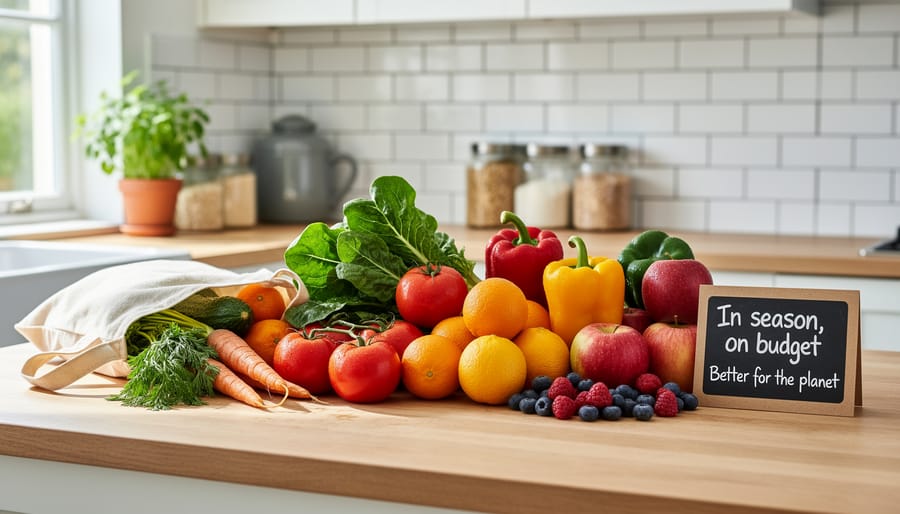
Buying produce when it’s naturally abundant in your region is one of the simplest ways to stretch your food budget while shrinking your carbon footprint. Local, in-season fruits and vegetables haven’t traveled thousands of miles in refrigerated trucks or planes, and because farmers are harvesting large quantities at peak ripeness, prices tend to drop. A basket of summer tomatoes in July costs a fraction of what you’d pay for the same varieties shipped from another hemisphere in January.
Start by getting familiar with your region’s harvest calendar. Many agricultural extension offices publish free seasonal produce guides online, and a quick search for “what’s in season [your state or region]” will give you a month-by-month breakdown. Print it out or save it on your phone so you know what to look for when you shop. When you see asparagus or strawberries piled high at the market, that’s nature’s signal they’re at their cheapest and most flavorful.
Finding local sources doesn’t have to mean joining a formal CSA program or driving to a distant farm. Check if your town has a farmers’ market, even small ones often run weekly during growing season. Many farmers also sell directly from roadside stands or offer pickup options through their websites. Some grocery stores feature local sections or mark regional produce with signs, making it easy to choose nearby growers without changing where you shop.
Another smart move is joining community food co-ops or buying clubs that source from local farms. These groups often negotiate bulk pricing and split orders among members, lowering costs while strengthening ties between consumers and growers. You’ll discover new varieties you wouldn’t find in conventional supermarkets and build relationships with people who share your values around food and sustainability.
The Smart Shopper’s Approach to Plant-Based Proteins
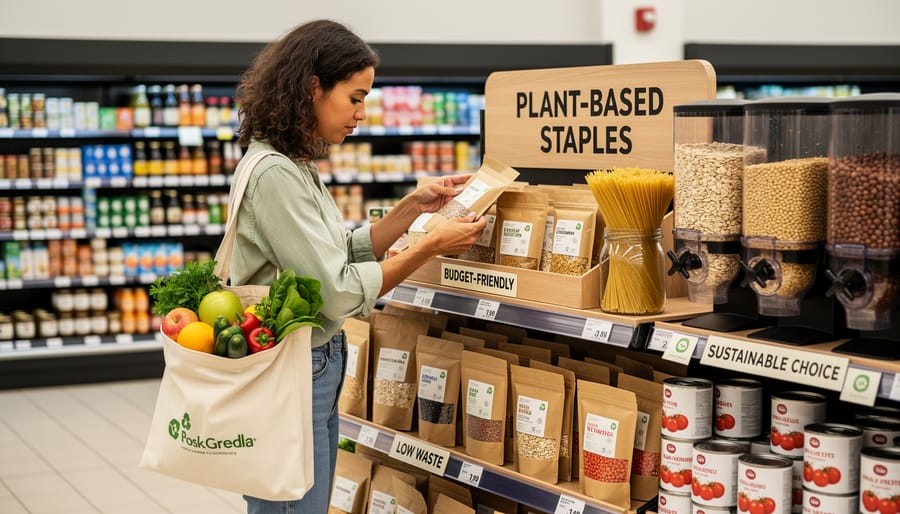
Plant-based proteins deliver more bang for your buck than most people realize, especially when you shop strategically. Dried legumes like lentils and chickpeas typically cost pennies per serving while providing substantial protein and fiber. Compare that to processed meat alternatives, which can run several dollars per portion for similar protein content.
Understanding cost per serving transforms how you evaluate protein sources. A pound of dried beans yields roughly eight servings after cooking, while that same money spent on plant-based burgers might give you three servings at best. Calculate the protein content per dollar spent, and whole foods consistently win. This comparison table shows how different options stack up:
| Protein Source | Cost per Serving | Protein Content | Environmental Impact |
|---|---|---|---|
| Dried Lentils | $0.15-0.25 | 18g per cup | Very Low |
| Canned Beans | $0.50-0.75 | 15g per cup | Low |
| Tofu | $0.75-1.25 | 20g per cup | Low to Moderate |
| Tempeh | $1.25-2.00 | 31g per cup | Low to Moderate |
| Processed Alternatives | $2.00-4.00 | 15-20g per serving | Moderate to High |
Buying in bulk slashes costs further. Grocery stores with bulk bins let you purchase exactly what you need while avoiding packaging waste. A 25-pound bag of brown rice or quinoa from a co-op or wholesale store often costs half what you’d pay for smaller packages. Store bulk purchases in airtight containers to maintain freshness for months.
Prioritize minimally processed options whenever your budget allows. Whole soybeans, split peas, and black beans require nothing but water and heat, keeping both costs and your carbon footprint low. Save the pricier meat substitutes for occasions when convenience matters most, or look for sales and stock up when prices drop. Many stores discount items nearing their sell-by date, which works perfectly for proteins you’ll freeze immediately.
Planning Before You Shop: The Game-Changer for Waste Reduction
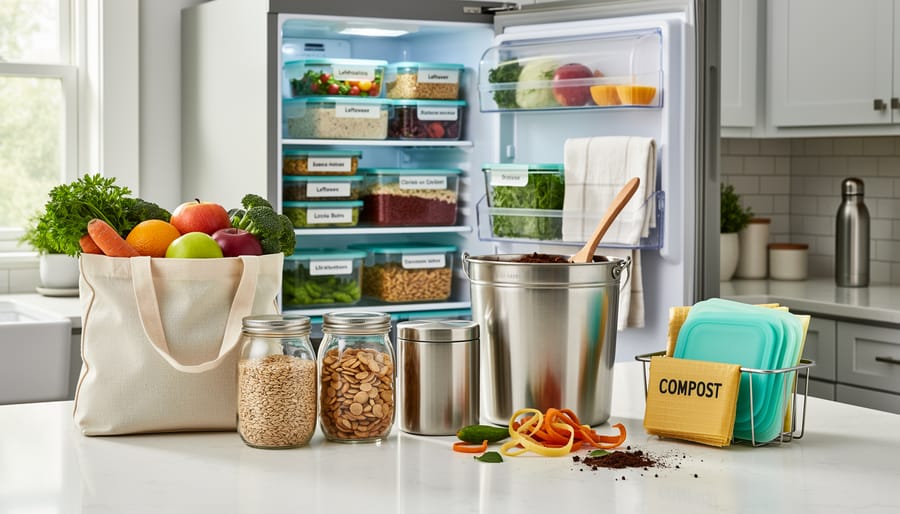
Walking into the grocery store without a plan is like shopping with your wallet wide open. A bit of preparation before you leave home transforms how you shop and dramatically cuts the food waste impact of your household.
Start by checking what you already have. Pull everything forward in your fridge and pantry, and make a quick list. You’ll be surprised how often ingredients hiding in the back can become tonight’s dinner. This ten-minute inventory prevents buying duplicates and ensures nothing spoils before you can use it.
Next, build a flexible meal framework for the week. Rather than rigid recipes, think in themes: Monday could be pasta night, Wednesday stir-fry, Friday soup. Leave room to adapt based on what’s discounted or looks freshest at the store. Plan meals that share ingredients so you use everything you buy. If you’re getting fresh herbs for one dish, find two more recipes that use them.
Create your shopping list around this framework, organizing it by store section to avoid wandering aisles where impulse buys happen. Stick to the list, but stay flexible enough to swap planned broccoli for cauliflower if it’s half the price or in better condition.
Understanding why food waste matters makes this planning feel less like a chore and more like meaningful action. When you shop with intention, you’re not just saving money. You’re reducing methane emissions from landfills, conserving the water and energy used to grow that food, and making your consumer smarts work for both your budget and the planet.
Packaging Matters: Making Choices That Reduce Your Footprint
Every time you toss packaging into recycling, you’re making a bet on what actually gets processed. Most consumers lose that bet. The numbers tell a sobering story: only about 9% of plastic waste ever produced has been recycled. The rest sits in landfills or fragments into microplastics that contaminate soil and water.
The smartest move? Avoid packaging altogether. Farmers markets, bulk food stores, and refill stations let you fill your own containers with grains, nuts, spices, and even oils. You’ll cut costs by 20-40% compared to pre-packaged equivalents while eliminating waste entirely. Bring cloth bags for produce instead of grabbing those thin plastic ones, most stores now welcome reusable containers at the checkout.
When package-free isn’t an option, the hierarchy matters. Glass and metal recycle infinitely without losing quality, making them genuinely sustainable choices. Cardboard and paper work well too, especially if uncoated and unbleached. Hard plastics numbered 1 and 2 (check the triangle on the bottom) have decent recycling rates in most municipalities, though you should verify with your local facility.
Here’s where consumer smarts become critical: avoid plastic labeled 3, 4, 5, 6, and 7. Despite bearing the recycling symbol, most facilities can’t process them economically. Soft plastics like bags, wrappers, and pouches almost never get recycled through curbside programs, regardless of what the label suggests. Those “compostable” bioplastics? They require industrial composting facilities that don’t exist in most areas.
Buy larger quantities in recyclable containers rather than multiple small packages. A 32-ounce jar of nut butter generates less waste per serving than eight 4-ounce containers. Compare the packaging-to-product ratio and choose accordingly.
Building Relationships With Sustainable Businesses
Your purchasing decisions send a powerful message, and when you consistently choose businesses that prioritize sustainability, you’re not just buying groceries, you’re investing in your community’s environmental future. Local farms, cooperative groceries, and independent retailers committed to eco-friendly practices rely on customer support to compete with larger chains, and your repeat business helps them thrive.
Start by seeking out farmers’ markets and farm stands where you can meet the people growing your food. These direct relationships let you ask questions about growing practices, seasonal availability, and packaging options while keeping more of your money in the local economy. Many farmers appreciate hearing what customers want and may even adjust their offerings based on regular feedback.
Independent grocers and specialty stores often partner with regional producers and can share stories about their sourcing decisions. Don’t hesitate to chat with staff or owners about their sustainability commitments, these conversations help them understand what matters to their customers and can influence future stocking choices.
Consider joining or volunteering with local food policy councils, community gardens, or sustainability groups. These organizations frequently collaborate with businesses on initiatives like composting programs, packaging reduction campaigns, and educational workshops. Your participation strengthens these partnerships and creates opportunities to shape how sustainable food reaches your community, turning individual shopping habits into collective environmental action.
Becoming a smarter consumer isn’t about perfection, it’s about making better choices when you can. By combining financial wisdom with environmental responsibility, you’re not just saving money; you’re supporting a healthier planet with every purchase. Start small: choose one strategy from this guide, whether it’s buying seasonal produce, checking labels more carefully, or learning to reduce food waste through better planning. These incremental changes add up to significant impact over time.
You don’t have to navigate this journey alone. Connect with your local sustainability community, farmers’ markets, food co-ops, and environmental groups, to discover new resources, share tips, and find support. These relationships make sustainable shopping easier, more affordable, and genuinely enjoyable. Remember, every informed decision you make strengthens both your budget and your commitment to a more sustainable food system.