
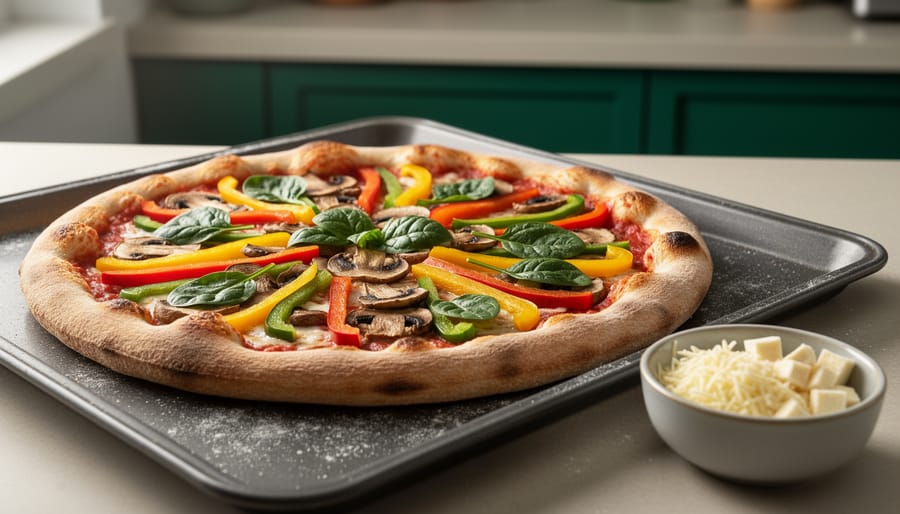

Finding plant-based pizza at a major chain can feel like a treasure hunt, especially when you’re craving something quick and convenient. The short answer: Domino’s does not currently offer vegan cheese at locations in the United States as of 2026. However, availability varies significantly by country, with select international markets like the UK offering dairy-free cheese options. If you’re in the US, you can still build a custom veggie pizza using Domino’s vegan-friendly crust and sauce options, though you’ll need to skip the cheese entirely or bring your own.
The situation reflects a broader shift happening across the pizza industry, where chains are responding to growing demand for plant-based options at different speeds depending on regional preferences and supply partnerships. While some international Domino’s locations have embraced vegan cheese through collaborations with dairy-alternative brands, US franchises haven’t made the same commitment yet. This doesn’t mean you’re completely out of options when your friends suggest Domino’s for dinner.
Understanding what’s actually vegan on the menu, which crusts work without modification, and how to customize your order makes all the difference between settling for a disappointing meal and enjoying a satisfying pizza night that aligns with your values. The key is knowing exactly what to ask for and what to avoid, since not all crusts and sauces at Domino’s are plant-based by default.
The Short Answer: Vegan Cheese Availability at Domino’s
If you’re searching for vegan cheese at Domino’s in the United States, the answer is no, the chain doesn’t offer vegan cheese or meatless pepperoni at US locations as of 2026. This means you can’t order the same gooey, melted-cheese experience in a plant-based version here.
The situation changes depending on where you are. Domino’s operates differently across countries, and some international markets have developed vegan menu options. Iceland, for instance, offers build-your-own vegan pizzas with more than 100 different combinations of toppings and sauces on their dedicated vegan menu. Other regions may have their own plant-based offerings, but availability varies widely from one country to another.
Even in markets where options exist, Veganuary, the organization that encourages people to try vegan eating, cannot safely recommend any pizzas as vegan at Domino’s. Their guidance points to significant variation between locations and concerns about cross-contamination during preparation. What’s available and how it’s prepared can differ from store to store, which means you’ll need to check directly with your local Domino’s rather than assume any menu item meets vegan standards.
For US customers committed to plant-based eating, this creates a challenge. You can build a custom veggie pizza without cheese, but the limited options mean Domino’s isn’t the most accommodating choice for vegan pizza lovers right now.
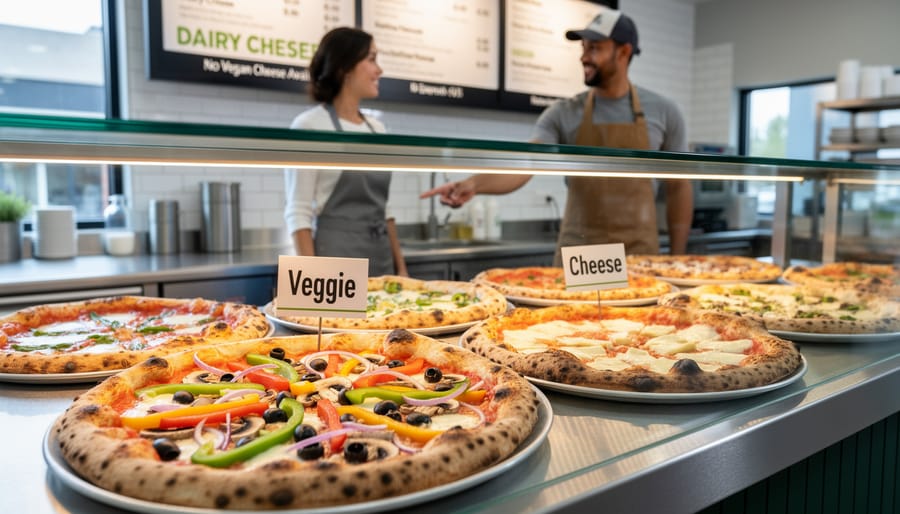
Cost by Location: What Plant-Based Domino’s Pizzas Actually Cost
Pricing for plant-based pizzas at Domino’s isn’t a straightforward answer, it depends entirely on where you’re ordering. Most markets don’t offer dedicated vegan options, and even where they do exist, costs fluctuate dramatically based on local pricing structures and available ingredients.
Iceland stands out as one of the few markets with transparent vegan pizza pricing. Their dedicated vegan menu lists build-your-own options ranging from 1,190 kr. to 1,490 kr., with specialty sauce add-ons priced at an additional 380 kr. These prices reflect a full vegan pizza with multiple topping choices, showing what a mainstream chain charges when they actually invest in plant-based offerings.
| Market/Location | Vegan Cheese Available? | Price Range (verified) | Notes |
|---|---|---|---|
| Iceland | Yes | 1,190 kr., 1,490 kr. | Sauce add-ons +380 kr.; over 100 topping combinations |
| United States | No | Pricing varies by store | Custom veggie pizza only; must verify pricing locally |
| Other Markets | Varies | No verified data | Check with local Domino’s for availability and cost |
For US customers, you’re limited to ordering a custom veggie pizza without cheese. Because Domino’s doesn’t publish standardized pricing for cheese-less pizzas and costs shift between franchise locations, we can’t provide accurate figures without risking misinformation. Your best approach is calling your local store or checking their online ordering system to see exactly what a custom plant-based build will cost in your area.
This geographic pricing gap highlights a broader reality: vegan options at chain restaurants remain inconsistent worldwide, and transparency around plant-based menu costs lags behind traditional offerings.
How to Order a Plant-Based Pizza at Domino’s (Without Vegan Cheese)
Ordering a plant-based pizza at Domino’s requires more intentionality than simply clicking “vegan” on a menu, but it’s absolutely doable once you know the steps. Since vegan cheese isn’t available in the US, you’ll be building a custom veggie pizza and relying on verification from your specific store.
Here’s how to navigate the ordering process:
- Call ahead or ask in-store to verify which crusts are vegan at your location. Guidance conflicts, some sources recommend thin crust while others advise avoiding it. Don’t assume any crust is automatically safe; ingredients and preparation methods vary by region and franchise.
- Choose a vegan-friendly sauce. Most locations offer marinara or robust tomato sauce as plant-based options, but confirm with staff that your chosen sauce contains no dairy or animal products.
- Explicitly request no cheese when placing your order. Make this clear whether you’re ordering online, through the app, or in person. In digital orders, use the customization options to remove cheese entirely.
- Load up on vegetable toppings to make your pizza satisfying. Options typically include mushrooms, onions, green peppers, black olives, tomatoes, spinach, and jalapeños. The more toppings you add, the less you’ll miss the cheese.
- Ask staff about cross-contamination protocols. Inquire whether they can use clean cutting boards and utensils, and whether pizzas are prepared in shared spaces with animal products. This matters especially if you have strict dietary requirements.
The verification step is critical. Veganuary notes that offerings vary from location to location and advises checking in-store for recommendations rather than assuming consistency across all Domino’s franchises. They cannot safely recommend any pizzas as definitively vegan at Domino’s due to this variation and cross-contamination concerns.
If your local store can’t confirm ingredients or accommodate your requests, that’s valuable information, it tells you whether Domino’s fits your plant-based eating plan or whether other pizza options serve you better.
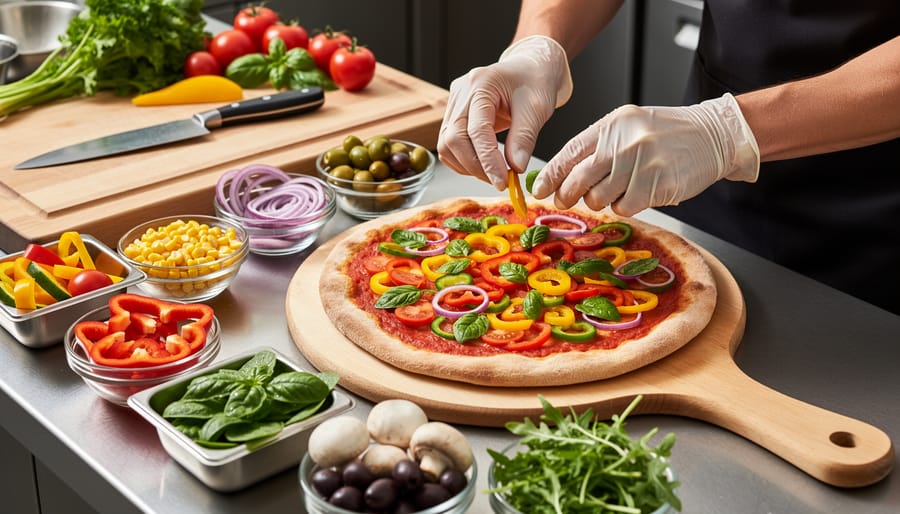
What Affects the Cost of Your Vegan Domino’s Order
Several factors influence what you’ll pay for a plant-based pizza at Domino’s, and understanding them helps you budget and avoid wasteful buys that don’t match your needs.
The biggest variable is location. Pricing structures differ dramatically between countries and even between regions within the same country. Iceland’s vegan menu, for instance, lists pizzas at 1,190 kr. to 1,490 kr., with specialty sauce add-ons at an additional 380 kr. Those figures won’t translate to US pricing, where you’ll be building a custom veggie pizza without cheese and facing entirely different cost structures.
Here’s what drives the final price:
- Location and regional pricing variations across countries and cities
- Sauce selection, with premium or specialty options potentially adding extra charges
- Number and variety of vegetable toppings you choose
- Crust type (prices may vary by crust style, though vegan options must be verified locally)
- Pizza size, from personal to extra-large
- Available deals, promotions, or combo offers at your specific store
Your sauce choice matters more than you might expect. While basic tomato sauce typically comes standard, some locations charge extra for specialty vegan-friendly sauces like garlic oil, barbecue, or other options, Iceland’s 380 kr. upcharge shows how quickly these add-ons increase your total.
Vegetable toppings can stack up too, especially when you’re loading a pizza to compensate for the absence of cheese. Each additional topping carries its own price, and those costs vary by store and region.
This location-to-location variation makes it impossible to give you a universal price. The only way to know what you’ll actually pay is to check with your specific Domino’s store, either by calling ahead or building your order online to see the final cost before you commit. That approach helps you avoid shopping tricks like assuming a veggie pizza will automatically cost less than a cheese pizza when that’s not always the case.
Vegan Menu Options: Where Domino’s Offers More Choices
While Domino’s US locations fall short on vegan options, several international markets demonstrate what happens when chains genuinely invest in plant-based offerings. Iceland stands out as the leader, with their dedicated vegan menu platform letting customers build from over 100 different combinations of toppings and sauces. This isn’t just token representation, it’s a full-fledged system that treats plant-based customers as a priority rather than an afterthought.
The Iceland approach shows exactly what’s possible when customer demand meets operational commitment. Instead of forcing vegan customers to navigate uncertainty and cross-contamination risks, they’ve created a straightforward ordering experience with transparent options. Other international markets have followed similar paths, though specifics vary widely by country and region.
This trend matters for sustainability-conscious consumers beyond just having more dinner choices. When major chains develop robust vegan menus, they normalize plant-based eating and make it accessible to people who might not seek out exclusively vegan restaurants. You can freeze leftovers from these larger portions, stretching both your budget and the environmental benefit of choosing plant-based meals.
Community demand drives these menu developments. Markets where consumers consistently request vegan options, and support them when offered, see continued investment and expansion. Your feedback to Domino’s locations, whether through direct requests or purchasing patterns, contributes to this broader shift in what mainstream chains consider standard offerings.
DIY vs. Ordering Custom: Making the Most of Limited Options
When Domino’s vegan options are limited, you’re left weighing convenience against control. Ordering a custom veggie pizza without cheese gets you a hot meal at your door, but making your own opens up possibilities that mainstream chains simply don’t offer yet.
The convenience factor tilts heavily toward Domino’s. You order, you wait, you eat. No shopping for ingredients, no preheating ovens, no flour-dusted countertops to scrub afterward. If you’re exhausted after work or feeding a group with mixed dietary needs, that simplicity matters. Delivery means you don’t even leave the couch.
Home pizza-making, though, gives you complete control. You choose a vegan cheese that actually melts and tastes good. You pick organic vegetables, experiment with cashew-based ricotta, or load on nutritional yeast for that umami hit. You know exactly what touched your food and where it was prepared, eliminating the cross-contamination concerns that come with shared kitchen equipment at pizza chains.
- No preparation or cleanup required.
- Delivery brings food to your door.
- Quick solution when time is tight.
- No vegan cheese option in most markets.
- Risk of cross-contamination with dairy products.
- Limited ability to customize beyond basic toppings.
- Access to quality vegan cheese and specialty ingredients.
- Complete control over preparation and cross-contamination.
- Generally costs less per serving once you have basics on hand.
- Requires time for prep, cooking, and cleanup.
- Need to stock ingredients and have proper equipment.
- Learning curve for getting dough and technique right.
Cost comparisons are tricky without verified Domino’s pricing across locations, but home pizzas typically run cheaper once you’ve invested in basics like flour, yeast, and a few reliable toppings. A homemade pie might cost a few dollars per serving when you make your own dough and sauce, whereas restaurant pizzas, even without cheese, carry labor, overhead, and delivery fees.
Neither choice is wrong. Some weeks you’ll want the ease of ordering out, even if it means a bare veggie pizza. Other times, the satisfaction of pulling a bubbly, cheese-covered masterpiece from your own oven is worth the effort. Both choices move you toward plant-based eating, and that’s what counts.
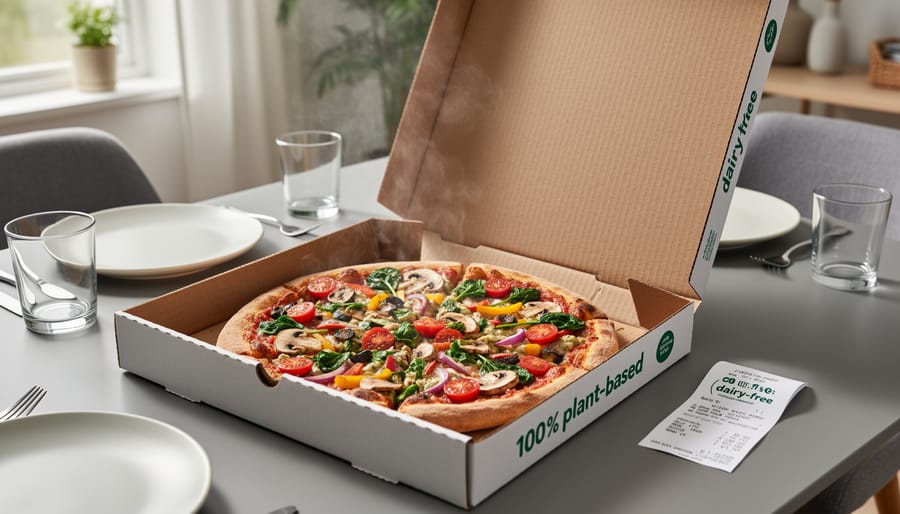
The Sustainability Side: Why Vegan Pizza Choices Matter
Choosing a plant-based pizza, even without vegan cheese, makes a real difference for the planet. Dairy production carries a substantial environmental cost: cheese alone accounts for roughly 10 kilograms of CO2 emissions per kilogram produced, significantly higher than vegetables or grains. The dairy industry also requires vast amounts of water, with a single kilogram of cheese demanding approximately 5,000 liters from farm to table, and dedicates enormous land areas to grazing and feed crops that could otherwise support diverse ecosystems.
When you order a veggie pizza without cheese at Domino’s, you’re reducing your meal’s carbon footprint by more than half compared to a traditional cheese-loaded option. Each plant-based choice you make sends a signal to food companies that customers want sustainable options, and that demand creates momentum for menu changes.
Community advocacy amplifies individual choices. Organizations working on food sustainability track consumer requests and engage directly with chains to expand plant-based offerings. The vegan menu developed in Iceland, with over 100 combinations, demonstrates what’s possible when customer demand meets corporate willingness to invest. While US options remain limited, your orders and feedback contribute to a collective voice pushing for change.
Every plant-based meal reduces resource consumption and greenhouse gas emissions, whether you’re ordering at a chain or cooking at home. These choices add up across communities, creating the market pressure that eventually shifts what restaurants offer and how food systems operate.

Frequently Asked Questions
Can I get vegan cheese at Domino’s in the United States?
No, Domino’s does not offer vegan cheese or meatless pepperoni in the US as of 2026. You’ll need to order your pizza without cheese and load up on vegetable toppings instead.
Which Domino’s pizza crust is vegan?
You must verify with your local store directly because guidance conflicts between sources. What’s suitable varies by location due to different ingredients and preparation methods, so always ask staff before ordering.
Are there hidden animal products I should watch out for?
Cross-contamination is a real concern since Domino’s prepares vegan and non-vegan items in the same kitchen. Always ask staff about preparation surfaces, ingredient lists, and whether your pizza will share equipment with meat or dairy products.
Is it cheaper to order a pizza without cheese?
Pricing varies significantly by location, and many stores don’t reduce the price when you remove cheese. Some locations may charge extra for additional vegetable toppings to compensate, while others keep the base price the same.
How can I request that Domino’s add vegan cheese in the future?
Share your feedback directly with your local Domino’s through their website contact form or in-store comment system. Customer demand drives menu changes, and collective requests from the community show chains there’s a market for plant-based options.
Which countries have the best vegan options at Domino’s?
Iceland stands out with a dedicated vegan menu offering more than 100 different combinations of toppings and sauces for build-your-own pizzas. International availability varies widely, so check the Domino’s website for your specific country to see what plant-based choices exist.
When you’re weighing whether to order from Domino’s or skip it entirely, remember that every plant-based meal choice matters for reducing environmental impact. Even a cheese-free veggie pizza cuts down on the dairy industry’s resource use, from water consumption to methane emissions. Your decision to choose vegetables over animal products contributes to lower greenhouse gas emissions, and opting for items you’ll actually eat helps minimize food waste impact too.
The lack of vegan cheese at US Domino’s locations feels limiting, but it also highlights an opportunity. When enough customers speak up and request plant-based options, chains respond. Your individual order might seem small, but combined with others making similar choices and voicing similar requests, you’re part of a shift toward more sustainable mainstream food options.
Cost by primary variable
The single biggest factor affecting what you’ll pay for a plant-based pizza at Domino’s is where you live. Location determines not just the price, but whether vegan options exist at all.
In the US market, Domino’s doesn’t offer vegan cheese or meatless pepperoni, so you’re ordering a custom veggie pizza without cheese. Pricing varies by franchise and region, but we can’t provide specific figures without verification from individual stores.
Iceland offers the clearest pricing picture because Domino’s there runs a dedicated vegan menu. Build-your-own vegan pizzas range from 1,190 kr. to 1,490 kr., with specialty sauce add-ons priced at an additional 380 kr. This market demonstrates what structured plant-based pricing looks like when chains invest in dedicated options.
Between these extremes sits a patchwork of international markets with varying availability. Some countries offer vegan cheese while others don’t. Some charge standard prices for cheese-less pizzas while others apply reductions or surcharges.
This location-driven variation makes it essential to check with your specific Domino’s before ordering. What works at one store, or even what was discussed at a community event featuring plant-based options, may not apply elsewhere. Call ahead or check the local online menu to confirm both availability and actual pricing in your area.
Cost breakdown
When you order a plant-based pizza at Domino’s, your final cost depends on several interconnected factors rather than a simple base price. Understanding how these elements combine helps you budget accurately and avoid surprises at checkout.
Base Pizza Structure: Your starting point includes the crust and sauce selection. Because you’ll order without cheese, you won’t pay for that component, but Domino’s doesn’t typically discount the total price by removing cheese in most markets. The base cost covers the dough, preparation, and your chosen sauce.
Topping Additions: Each vegetable topping adds to the total. The more vegetables you select to compensate for the missing cheese, the higher your final price climbs. Markets with dedicated vegan menus show this clearly, Iceland’s vegan offerings range from 1,190 kr. to 1,490 kr. depending on topping combinations.
Sauce Premiums: Standard sauces like marinara typically come included, but specialty or premium sauces often cost extra. Iceland’s vegan menu charges +380 kr. for certain sauce add-ons, illustrating how sauce choice directly impacts your total.
Regional Variation: Location determines your actual cost more than any other factor. Pricing structures differ dramatically between countries, regions, and even individual stores. Without verified US pricing data for custom vegan orders, checking with your local Domino’s remains the only reliable way to know what you’ll pay.
Price factors
Several interrelated factors determine what you’ll pay for a plant-based pizza at Domino’s, though the specifics vary dramatically depending on where you order.
Location makes the biggest difference. International markets with established vegan menus often have straightforward pricing, Iceland’s vegan pizzas range from 1,190 kr. to 1,490 kr., for example. In the US, where there’s no vegan cheese option, you’re building a custom veggie pizza, and pricing depends entirely on your local store’s rates for custom orders.
Sauce selection affects cost in some markets. Iceland charges an additional 380 kr. for certain specialty sauces on vegan menu items. Whether your local Domino’s charges extra for premium sauces versus standard options like marinara or garlic oil depends on regional pricing structures.
Toppings add up. The more vegetables you load onto your no-cheese pizza, the higher the price climbs. Each additional topping carries its own cost, though specific per-topping charges vary by location and aren’t publicly standardized across markets.
Crust type may influence pricethough this depends on local store policies. Some locations charge differently for various crust options, while others keep crust pricing consistent regardless of type you choose.
Finding plant-based options at Domino’s takes effort, especially in the US where vegan cheese isn’t available. You’ll need to customize your order carefully, verify ingredients with your local store, and accept that what works varies dramatically from one location to another. Costs depend on where you are, we’ve seen verified pricing from Iceland ranging from 1,190 kr. to 1,490 kr. for vegan menu items, but most markets don’t publish transparent plant-based pricing.
These limitations are real, but they shouldn’t stop you from making plant-based choices when they fit your situation. Every veggie pizza you order instead of a traditional cheese pizza reduces demand for dairy products and their associated environmental impact. Water saved, emissions avoided, land preserved, it all adds up.
What matters more than any single meal is the collective signal we send. When customers consistently request vegan cheese and plant-based options, chains notice. When we support organizations advocating for menu changes and vote with our orders, we create the market pressure that shifts what mainstream restaurants offer. Your choices today help shape what’s available tomorrow, both for you and for the next person searching for sustainable options at their local pizza chain.