
A good tofu stew is a one-pot job: simmer silky or firm tofu in a flavourful broth with vegetables, and dinner is ready in about 25 minutes. No special skills needed, just a pot, a stovetop, and a little patience while the flavours come together.
This guide walks you through three stews that each take tofu somewhere different. Spicy Soft Tofu Stew brings silky tofu in a bold, chili-warmed broth, serves 2 to 3, and cooks in about 25 minutes. A Korean-style soft tofu stew leans on gochugaru, shiitake, and enoki for a comforting bowl on a chilly night. And an Indonesian tofu stew with spring vegetables pairs firm tofu with green beans, bell pepper, and zucchini in a light coconut lime broth that serves 8, so it’s perfect for sharing.
Tofu stew is also a lovely way to cook with the vegetables you already have. Swap in what’s in season, skip the seafood or egg for a vegan version, and make a big pot to pass around the table. We’ll cover the tools and ingredients, a few safety notes, the cooking steps, and how to tell when your stew is just right.
Why Tofu Stew Is a Smart, Comforting Choice
Stews and Using What You Have
Stews are wonderfully forgiving. A zucchini that’s seen better days, a handful of green beans, half a red bell pepper left from last night’s dinner: all of it can slip into the pot and simmer into something warm. That’s one of the easiest ways to reduce food waste without making a big production of it.
Because tofu stews cook in one pot, you can also size the batch to what you actually have. Two bowls tonight? Chop a little less. Feeding a crowd? Just add more broth and vegetables.
Not sure what pairs well? Community potlucks and cooking workshops are great places to swap ideas, and you’ll likely leave with a new vegetable combination to try.
Meet the Three Tofu Stews: Flavors, Serving Sizes, and Key Details
Not every pot of tofu stew is the same, so here’s a quick look at the three we’re making to help you choose.
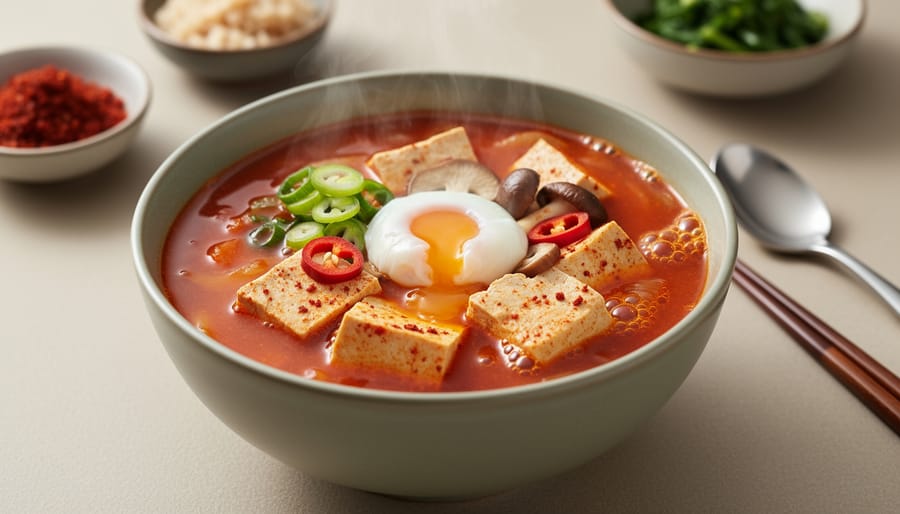
Korean tofu stew is the coziest of the bunch. It brings warm Asian flavors and just a little spice, which makes it a natural pick for a chilly day. The base builds on gochugaru, soy sauce, sugar, and stock, and the pot is filled with shiitake mushrooms, silken tofu, enoki, and green onion.
Spicy Soft Tofu Stew is the one to reach for when you want more heat. Silky tofu simmers in a bold, spicy broth, and the whole thing comes together in about 25 minutes. It serves 2 to 3, so it’s a good fit for a quiet dinner for two or a small household.
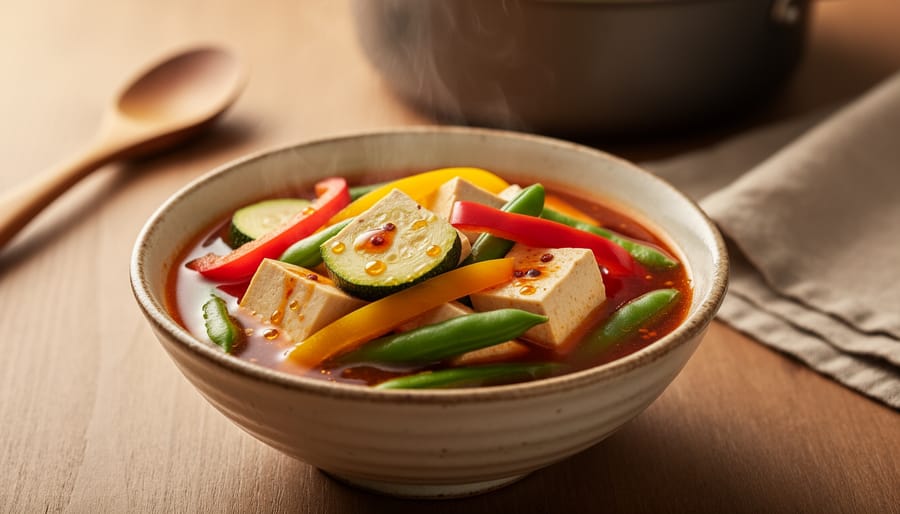
Indonesian tofu stew with spring vegetables is the lightest of the three. Green beans, red bell pepper, and zucchini float in a broth with a gentle coconut lime flavor, rounded out with firm or extra firm tofu. This one serves 8, at 1 cup (250 mL) each, which makes it the obvious choice when you’re feeding a crowd or bringing a pot to share.
So the choice is simple. Want comfort with a little warmth? Go Korean. Want a fast, fiery bowl? Try the spicy soft tofu stew. Cooking for a group? The Indonesian stew has you covered.
Tools and Ingredients to Gather Before You Start
Korean Soft Tofu Stew Pantry List
Here’s what to set out for the Korean soft tofu stew. It’s a short list, and most of it keeps well in the pantry:
- Gochugaru (Korean chili flakes)
- Soy sauce
- A pinch of sugar
- Stock
- Shiitake mushrooms
- Silken tofu
- Enoki mushrooms
- Green onion
Silken tofu is delicate and holds plenty of water already, so you can skip pressing it. If you ever want to use a tofu press for firmer stews later, save that step for those recipes. Mushroom stems and green onion ends are great for the stock, too.
Spicy Soft Tofu Stew Pantry List
Here’s what to have on hand for the spicy soft tofu stew, which serves 2 to 3 and cooks in about 25 minutes:
- Soft tofu
- Onion, jalapeno, zucchini, and green onion
- Garlic and sesame oil
- Korean chili flakes, sugar, and soy sauce
- Water for the broth
- Seafood mix, oyster sauce, and egg (optional if you’d like a fully vegan pot)
If you’d like to keep things plant-based, you can simply skip the seafood mix, oyster sauce, and egg. A splash more soy sauce and a few extra vegetables will keep the pot hearty and full of flavor.
Indonesian Spring Vegetable Stew Pantry List
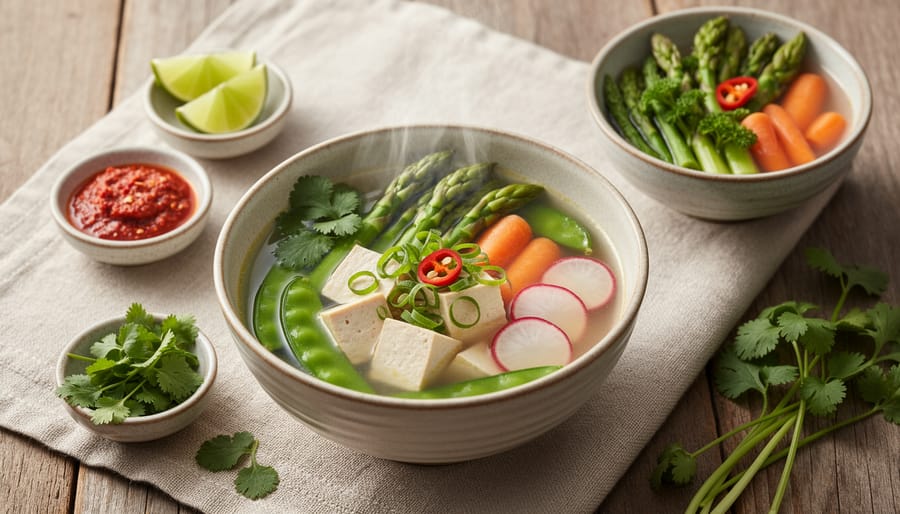
This stew has a bigger pantry list than the other two, but most of it is spices and vegetables you may already have. Gather these before you start:
- Firm or extra firm tofu
- Fresh ginger, onion, and garlic
- Cumin, coriander, and cloves
- Canola oil and lime juice
- Reduced-sodium vegetable broth
- Light coconut milk
- Green beans, red bell pepper, and zucchini
- Fresh cilantro for finishing
Choose vegetable broth to keep the pot fully plant-based. Swap in whatever spring vegetables you have on hand if one of these is missing.
Before You Cook: Safety Warnings and Kitchen Tips
Tofu stew is easy to make, but hot liquid and chili deserve a little respect. Ladle and stir carefully, because bubbling broth can splash, and keep a hand on the pot handle when you move it. When it’s time to add the tofu, slide it in with a large spoon and nudge it gently instead of stirring hard, so it stays in tender pieces and doesn’t spit hot liquid at you.
Chili flakes and jalapeno bring the heat, so wash your hands after handling them and keep them away from your eyes. If you’re using the seafood mix or egg in the spicy stew, keep raw items and their utensils separate from your vegetables and wash up before moving on.
Heat is easy to add and impossible to take back, so start mild and build up a pinch at a time. Taste as the stew simmers and adjust until it feels right for everyone at the table.
How to Cook Tofu Stew: A Step-by-Step Process
Spicy Korean-Style Soft Tofu Stew in About 25 Minutes
This stew comes together fast, about 25 minutes from the first sizzle to the first spoonful, and it serves 2 to 3. The trick is keeping the tofu soft and the broth bold.
- Stir together your seasoning base: Korean chili flakes, a little sugar, soy sauce, and minced garlic.
- Warm a spoonful of sesame oil in a medium pot or saucepan over medium heat.
- Cook the chopped onion, jalapeno, and your seasoning base for a minute or two, until the kitchen smells wonderfully fragrant.
- Pour in about two cups of water or stock and bring it to a gentle boil, then lower to a simmer.
- Add sliced zucchini and mushrooms, and simmer until they’re tender but not mushy.
- Slide in the soft tofu in large spoonfuls, then let it heat through without stirring much so it stays in big, silky pieces.
- If you’re using an egg, crack it into the bubbling stew now. Finish with sliced green onion.
Spoon the tofu in rather than stirring it, since soft tofu breaks apart easily, and it only needs a few minutes to warm through. Taste the broth before you add the egg, and nudge the heat up or down with a pinch more chili flakes or a splash of water. Serve it right away while it’s still bubbling.
Indonesian Tofu Stew with Spring Vegetables
Start with the aromatics, since they carry the stew. Heat a little canola oil in a large pot over medium heat, then soften the chopped onion until it turns glossy. Stir in the garlic and ginger, then add the cumin, coriander, and a pinch of ground cloves. Give it about a minute until the kitchen smells warm and toasty. Cloves are strong, so go lightly.
Pour in the vegetable broth, ideally a reduced-sodium one so you stay in control of the seasoning, and add the light coconut milk. Bring it to a gentle simmer and tip in the green beans, red bell pepper, and zucchini. Cook until they’re tender but still have a little bite, which keeps the colors bright and the texture pleasant.
Now for the tofu. Cut the firm or extra firm block into cubes and slip them in with a spoon, then stir very gently. Firm tofu holds up well, but a calm hand keeps the pieces whole. Let it warm through for a few minutes.
Finish off the heat with a squeeze of lime juice and a handful of chopped cilantro. The lime wakes up the coconut and gives the whole pot its fresh, light flavor.
This recipe serves 8 at 1 cup (250 mL) each, so it’s a great pot to share. Ladle it out for friends or bring it to a community meal.
Make It Your Own: Heat Levels, Swaps, and Sharing the Pot
Once you have a stew you like, start tinkering. These pots are forgiving, and small changes make them yours.
- Dial the heat up or down by adding Korean chili flakes or gochugaru a pinch at a time, or by leaving the jalapeno out.
- Swap in seasonal vegetables like green beans, bell pepper, or zucchini, whatever is in your fridge.
- Choose silken or soft tofu for the silky Korean-style stews, and firm or extra firm for the Indonesian coconut-lime pot, since it holds its shape better.
- Skip the egg, seafood mix, and oyster sauce for a fully vegan pot, and use vegetable broth.
- Share the pot at a neighborhood meal, or invite friends over to swap recipes.
The Indonesian stew serves 8, so it’s a natural fit for a stew night or a community potluck. Pair it with a few vegan appetizers and you’ve got a whole table of planet-friendly food. Keep an eye out for local cooking workshops and partner-led events too. They’re a lovely way to trade ideas, taste someone else’s version, and pick up a trick or two for your next pot.
How to Tell Your Stew Turned Out Right (and What to Try Next)
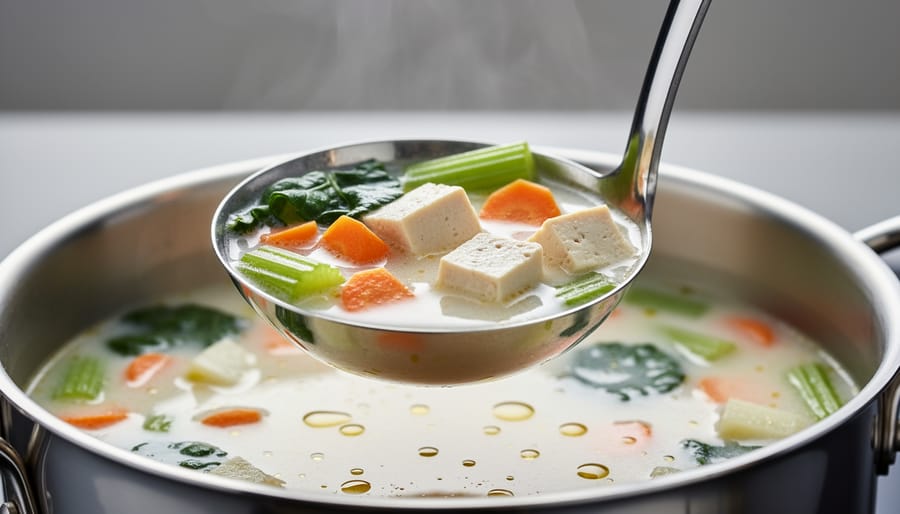
Give the pot a quick check before you ladle it out. The broth should be bubbling gently and smell fragrant, with the chili, garlic, ginger, or spices coming through. Vegetables like zucchini, green beans, and bell pepper should be tender without turning mushy, and the tofu should hold its shape and be heated through.
Then taste. The spicy stews should balance heat with savory depth and a touch of sweetness, while the Indonesian version should feel bright and lightly creamy. If it tastes flat, add a splash of soy sauce or a squeeze of lime. If it’s too spicy, stir in a pinch of sugar or a little more broth or water. If it’s too thin, simmer a few minutes longer before the tofu goes in.
Next time, try a different stew from this list, or tweak the heat and vegetables to match your pantry. Share the pot with friends or neighbours, and if there’s extra, you can safely freeze leftovers for an easy meal later.
Tofu Stew Recipes: Common Questions
Which tofu is best for tofu stew?
Soft or silken tofu suits the Korean-style stews, since it turns silky in the broth. Firm or extra firm tofu works best for the Indonesian stew because it holds its shape while the vegetables simmer.
When should I add the tofu?
Add it near the end, once the broth is flavorful and the vegetables are nearly tender. Slide it in gently so it heats through without breaking apart.
How do I make the spicy stew vegan?
Skip the seafood mix, oyster sauce, and egg, and use vegetable stock or water. A splash of soy sauce and a little sesame oil keep the savory depth.
How many people does each recipe serve?
The Spicy Soft Tofu Stew serves 2-3 and takes about 25 minutes. The Indonesian stew serves 8 at 1 cup (250 mL) each, so it’s a great pot to share.
Still have a question? Cooking a stew is forgiving, so taste as you go and adjust to your liking.
Whichever pot you reach for, the rhythm stays the same: build a flavorful base, add your vegetables, and slide the tofu in gently near the end so it stays tender. The spicy Korean-style soft tofu stew is a bold, comforting dinner you can have on the table in about 25 minutes. The seafood-and-egg version of Spicy Soft Tofu Stew brings silky tofu to a fiery broth, and the Indonesian tofu stew with spring vegetables offers a lighter coconut-lime pot that stretches to serve eight.
So pick the one that suits your next chilly evening, and don’t worry about getting it perfect. Swap in the vegetables you already have, turn the heat up or down, and taste as you go.
Stew is best when it’s shared, too. Invite a neighbor over, bring a pot to a community meal, or trade ideas with other home cooks. And if you’d like more company in the kitchen, take a look at Eatgrain.ca’s events and partner resources. We’d love to see what lands in your bowl.