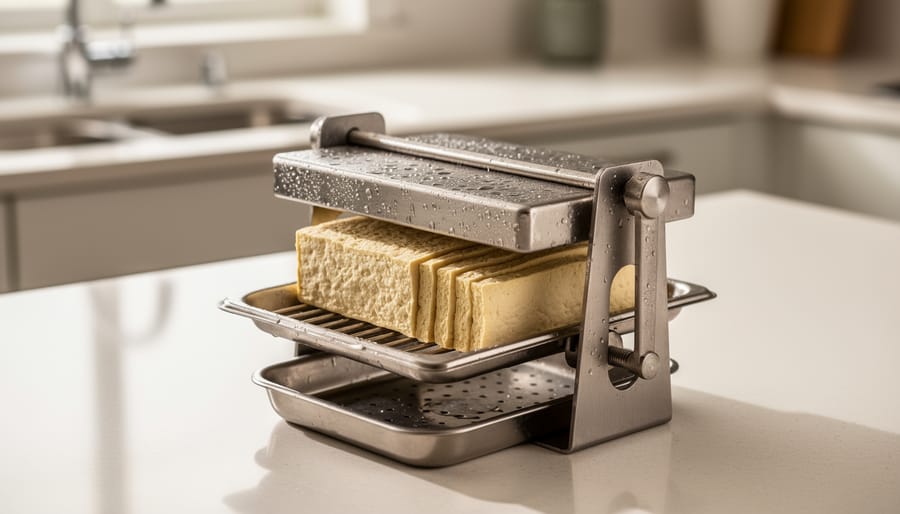

A tofu press removes excess moisture from tofu in about 15 minutes, transforming soft, waterlogged blocks into firm, absorbent slices that crisp beautifully when cooked and soak up marinades like a sponge. This simple kitchen tool uses steady, even pressure to squeeze out the liquid that prevents tofu from browning properly and keeps sauces from penetrating the surface.
For anyone embracing plant-based eating, pressing tofu properly makes the difference between bland, rubbery cubes and golden, flavorful pieces that even skeptics enjoy. The investment pays off quickly. Current models range from budget-friendly options around $13 to premium presses near $49, with popular mid-range choices like the Tofuture and EZ Tofu Press sitting between $24 and $26.
The process matters for more than just taste. Choosing reusable kitchen tools over disposable solutions aligns with a low-waste kitchen approach, and mastering tofu preparation encourages more home-cooked plant-based meals. A good press handles standard 8-16 oz blocks, fits neatly in most refrigerators (typical dimensions around 6″L x 5″W x 3″H), and works for other tasks like pressing paneer or soft cheeses. Whether you’re new to cooking tofu or tired of the paper-towel method, understanding how to select and use a press properly will change how you approach this versatile protein.
What You’ll Need to Press Tofu
Getting started with tofu pressing requires just a few simple items. At minimum, you’ll need a tofu press device and a block of firm or extra firm tofu. Set up on a clean, stable surface near your sink to catch the expelled liquid, and you’re ready to go.
The essential materials include:
- A tofu press device (spring-loaded, dual-pressure, or manual style)
- One block of firm or extra firm tofu (typically 8-16 oz or 225-450 g)
- A clean surface near your sink or a bowl to catch drained liquid
- Clean kitchen towel or paper towels for any spills (optional)
Tofu press options in 2026 range from straightforward spring-loaded models to more sophisticated dual-pressure systems. Basic models like the Yarkor Tofu Press start around $13, offering a budget-friendly entry point. Mid-range options such as the Tofuture Tofu Press, priced at $23.99, handle standard block sizes with reliable spring mechanisms. For those wanting more control, the TofuBud features two pressure levels and works equally well as a paneer press or cheese press for anyone exploring different plant-based preparations, though it commands a higher price at $48.99.
Most presses accommodate the standard tofu block sizes you’ll find at grocery stores. The versatility of modern tofu presses makes them worthwhile additions to a sustainable kitchen, eliminating the need for heavy books, plates, and wasteful paper towels while delivering consistent results every time.
Choosing the Right Tofu Press for Your Needs
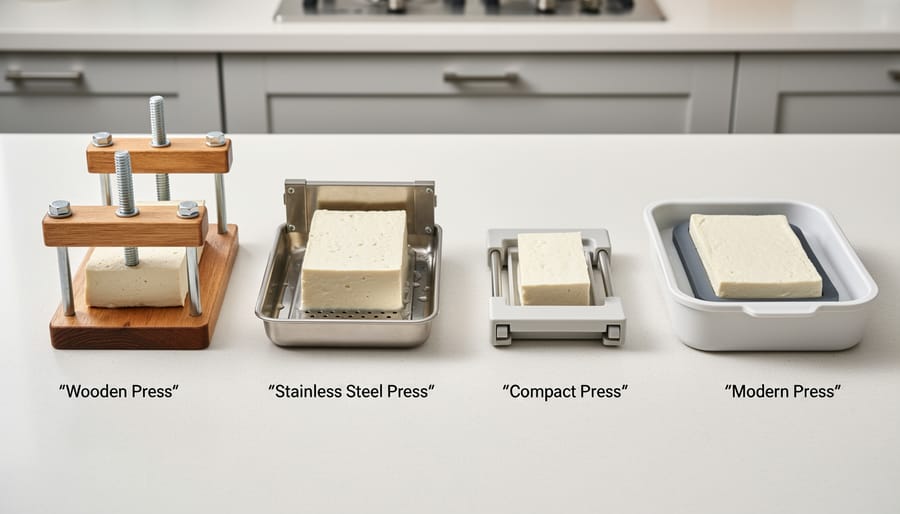
Selecting a tofu press comes down to three main factors: how much tofu you typically prepare, the features you need, and what fits your budget.
Most tofu presses accommodate standard block sizes ranging from 8 to 16 ounces (225 to 450 grams). Check the interior dimensions before buying, presses typically measure around 6 inches long by 5 inches wide, with heights varying between 2.5 and 3 inches. If you regularly cook for one or two people, a compact single-block press works perfectly. Larger households might benefit from a press that handles bigger blocks or allows you to press multiple servings at once.
Pressure settings make a real difference in versatility. Basic spring-loaded models apply consistent pressure and work well for everyday pressing. Dual-pressure systems like the TofuBud give you control over firmness, lighter pressure preserves texture for delicate dishes, while firmer settings create denser tofu ideal for grilling or frying. This flexibility matters if you prepare tofu in various ways throughout the week.
Budget-wise, you’ll find capable presses starting around $13 for straightforward models. Mid-range options typically cost between $23 and $26, offering solid construction and reliable performance. Premium presses with dual-pressure features reach about $49. The price difference usually reflects build quality, pressure options, and thoughtful design details.
From a sustainability angle, prioritize durability and cleanability. A well-made press lasts years, eliminating the waste of paper towels or cloths used in traditional pressing methods. Look for presses with removable parts that rinse easily or go in the dishwasher. Materials that resist staining and odor absorption keep the press hygienic without harsh cleaning chemicals. Investing in a quality press pays off through longevity and reduced kitchen waste.
Important Tips Before You Start
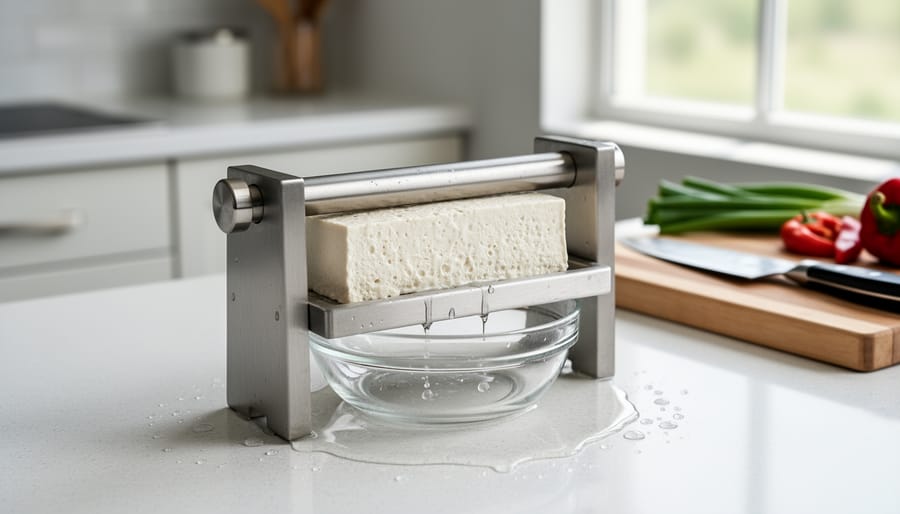
Before you press your first block of tofu, set yourself up for success with a few simple checks. Start by thoroughly cleaning your tofu press with warm, soapy water, especially if it’s new or hasn’t been used in a while. Position your press on a stable countertop or cutting board near the sink so liquid can drain easily without creating a mess. Check your tofu’s use-by date tips to confirm it’s fresh, and choose firm or extra firm varieties for best results.
Beyond safety, think about sustainability. Reusable tofu presses eliminate the need for stacks of paper towels or kitchen linens that many traditional pressing methods require. This simple switch helps prevent food waste while reducing your environmental footprint. A durable press can last years with proper care, making it a smart investment for both your kitchen and the planet.
Step-by-Step: How to Press Tofu
Adjusting Pressure Settings
Most tofu presses come with a single spring-loaded pressure system that applies consistent force throughout the pressing process. Place your tofu block in the press, close the lid, and tighten the screws or latches until you feel moderate resistance, that’s typically sufficient for everyday cooking needs.
If you’ve invested in a dual-pressure model like the TofuBud, you’ll have more control over the drainage process. Start with the lighter pressure setting for delicate preparations where you want to retain some moisture, such as scrambles, soups, or crumbled tofu for salads. The gentler squeeze removes excess water while keeping the tofu tender enough to break apart easily.
Switch to the firmer pressure setting when you’re preparing tofu for grilling, pan-frying, or stir-frying. This higher pressure extracts more liquid and creates a denser texture that holds its shape during cooking and develops a better sear. You’ll notice the tofu feels noticeably firmer to the touch and has shrunk slightly in size.
For single-pressure models, you can adjust firmness by varying the pressing time rather than the pressure itself. A lighter hand on the screws combined with a shorter press gives similar results to a dual-system’s gentle setting.
Timing Your Press for Different Results
The standard 15-minute press works beautifully for most cooking methods, giving you tofu that’s firm enough to hold its shape while still retaining a pleasant, slightly tender bite. If you’re planning a delicate dish like a light stir-fry or a soup where you want the tofu a bit softer, reduce the time to 10 minutes. For grilling, pan-frying, or recipes where you need the tofu to really hold up and develop a crispy exterior, extend the pressing to 20-30 minutes.
You’ll know your tofu is ready when you see a noticeable amount of liquid collected in the drip tray and the block feels firmer to the touch. The tofu should look slightly compressed, with a denser appearance than when you started. Gently press the surface with your finger: properly drained tofu springs back slowly rather than feeling spongy or waterlogged. After 15 minutes, most blocks release several tablespoons of liquid and achieve that sweet spot between firm and workable.
How to Tell When Your Tofu Is Properly Pressed
Knowing when your tofu is perfectly pressed makes the difference between soggy and restaurant-quality results. After the 15-minute pressing time, you’ll see clear signs that the process is complete.
Start by gently pressing the tofu block with your fingertips. Properly pressed tofu feels firm and springy with minimal give, quite different from the soft, spongy texture of unpressed tofu. The block should hold its shape under light pressure rather than dimpling deeply.
Visual checks are equally reliable. Look for these indicators:
- Firm to touch with minimal give when pressed gently
- Reduced in height by 20-30% compared to the original block
- No visible liquid when gently squeezed from the sides
- Ready to absorb marinades quickly without beading on the surface
Check the collection tray beneath your press. A properly pressed 14-16 oz tofu block typically releases 3-5 tablespoons of liquid, sometimes more depending on the brand’s initial moisture content. The tofu should appear noticeably denser and more compact than when you started.
If you’re still seeing water droplets form when you handle the tofu, or if it feels excessively soft in the center, give it another 5 minutes in the press. Once ready, the tofu will soak up marinades within seconds rather than repelling them, and it’ll develop that coveted crispy exterior when cooked.
Next Steps: What to Do With Pressed Tofu
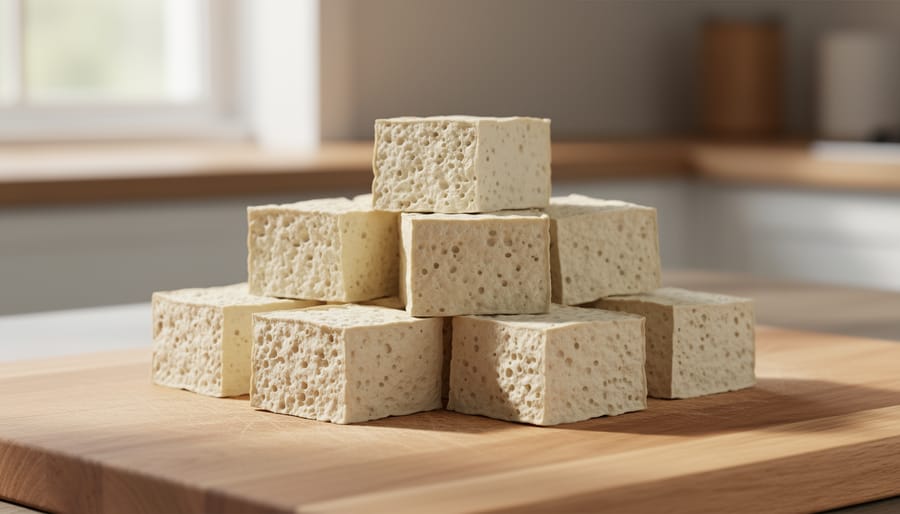
Your freshly pressed tofu is now ready to transform into delicious plant-based meals. The firm, porous texture you’ve created absorbs marinades beautifully, try cutting it into cubes and tossing with soy sauce, garlic, and ginger for a quick stir-fry, or slice it into planks for grilling with barbecue sauce. Crumbled pressed tofu makes an excellent scramble base that soaks up turmeric and nutritional yeast for a flavorful breakfast.
Because you’ve removed excess moisture, your tofu will develop that coveted crispy exterior when pan-fried or baked, and it won’t dilute sauces during cooking. This improved texture and flavor absorption makes pressed tofu a versatile ingredient for sustainable meal planning.
Store any unused pressed tofu in an airtight container with fresh water (changed daily) for 3-5 days in the refrigerator. For longer storage, you can freeze tofu safely for up to three months, freezing actually creates an even chewier, meatier texture that some cooks prefer. Batch-pressing tofu on meal prep day means you’ll have ready-to-cook protein throughout the week, reducing both food waste and last-minute cooking stress.
Cleaning and Maintaining Your Tofu Press
Rinse your tofu press under warm water immediately after use to remove residue and prevent lingering odors. Most models disassemble into a few simple parts, base tray, pressure plate, and springs or screws, making them easy to clean thoroughly. Check your specific model’s instructions, as some presses are dishwasher-safe while others require hand-washing to preserve spring tension and finish.
Air-dry all components completely before reassembling. Moisture trapped in crevices can develop unpleasant smells over time, so leave parts separated on a drying rack for a few hours. Once a month, inspect springs for rust or weakening and check that screws or knobs still turn smoothly. A well-maintained press can last years, reducing waste and supporting your sustainable kitchen goals far better than disposable paper towels or single-use alternatives.
Common Questions About Tofu Pressing
Can I press tofu without a press?
Yes, you can wrap tofu in clean towels and place weighted objects on top, but a dedicated press is faster, more consistent, and eliminates the waste of repeatedly soaking towels. Modern presses complete the job in 15 minutes with minimal cleanup.
How often should I press tofu?
Press tofu every time you cook it for the best texture and flavor absorption. Even pre-pressed tofu from the store benefits from a quick 10-minute session to remove additional moisture.
Can I press tofu ahead of time?
Absolutely. Pressed tofu stores well in an airtight container in the refrigerator for 3-5 days, making it perfect for meal prep and reducing kitchen time during busy weekdays.
Will a tofu press work on other foods?
Yes, tofu presses double as paneer presses and work well for soft cheeses that need draining. The same pressure mechanism that removes moisture from tofu works effectively on similar-textured foods.
Beyond these common questions, many home cooks wonder whether firmer tofu requires longer pressing times. The answer depends more on your cooking method than the tofu’s starting firmness. Extra-firm tofu destined for grilling might need 20 minutes, while firm tofu for a stir-fry works perfectly at the standard 15-minute mark. Trust your hands: when the block feels noticeably firmer and springs back quickly when pressed, it’s ready.
Some readers ask about re-pressing tofu after marinating. This isn’t necessary and can actually squeeze out the flavors you’ve just added. Press once before marinating, then cook directly from the marinade for maximum flavor retention.
Pressing tofu doesn’t need to be complicated or time-consuming. With the right tofu press and just 15 minutes, you can transform a bland block into a flavor-absorbing foundation for countless plant-based dishes. Whether you’re grilling, stir-frying, or marinating, properly pressed tofu delivers the texture and taste that makes switching to plant-based proteins feel less like a sacrifice and more like a culinary upgrade.
Investing in a quality tofu press is a small but meaningful addition to your sustainable kitchen toolkit. It eliminates the waste of paper towels, streamlines your meal prep, and opens up a world of delicious, eco-friendly cooking possibilities. If you’re looking to deepen your plant-based skills beyond tofu pressing, check out local community cooking workshops where you can learn alongside neighbors who share your values. Many organizations that host events like a composting workshop also offer hands-on sessions for tofu preparation, fermentation, and other sustainable kitchen techniques.
The path to more flavorful, planet-friendly meals starts with simple steps like this. Grab a press, a block of tofu, and 15 minutes, you’ll be amazed at the difference it makes.