
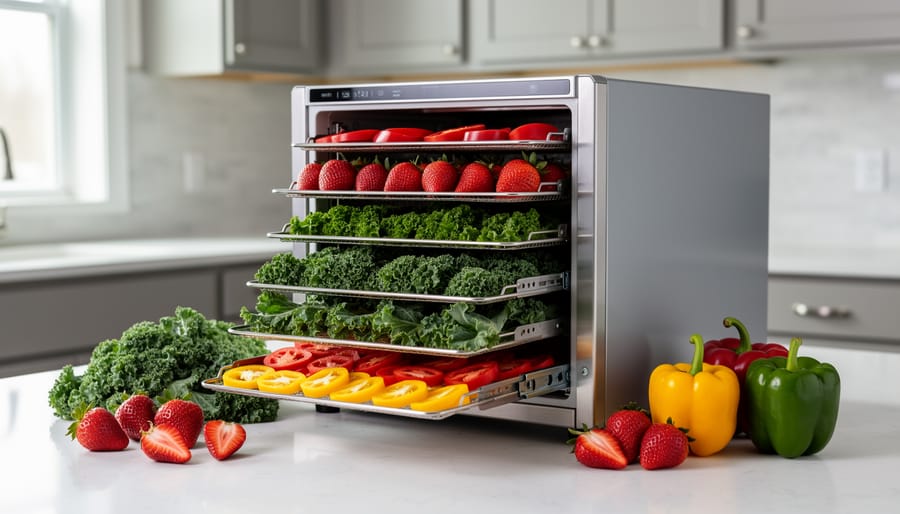

Freeze drying fruits and vegetables lets you preserve fresh produce for years while retaining up to 97% of its nutritional value, and you can do it at home with a dedicated freeze dryer in about 24 to 36 hours per batch. Unlike dehydrating or canning, freeze drying removes moisture through sublimation (turning ice directly into vapor), which means your strawberries, kale, and peppers keep their original shape, color, and most importantly, their vitamins and minerals. The shelf life stretches to 25 years when stored properly, making this method a powerful tool for reducing food waste and building resilience into your kitchen.
The process itself is straightforward: you prepare your produce, load it into trays, and let the machine handle the rest. Home freeze dryers have become more accessible, and while the upfront investment is significant (typically between $2,000 and $4,000), the long-term savings add up quickly if you’re regularly composting wilted greens or tossing overripe fruit. You’re also taking control of what goes into your food. No added sugars, no preservatives, just the produce you chose.
What makes freeze drying especially appealing for those of us focused on sustainability is the waste reduction angle. You can preserve an entire harvest, rescue surplus from farmers’ markets, or stock up when prices drop. It’s a quiet way to participate in your local food system while cutting down trips to the grocery store and the packaging that comes with them.
Why Freeze Drying Is a Sustainability Game-Changer
Freeze drying transforms preservation into a powerful act of environmental stewardship. When you freeze dry seasonal produce at peak ripeness, you lock in nutrients and flavor for years without the constant energy drain of freezer storage. Unlike canning or dehydrating, freeze drying maintains up to 97% of original nutritional value while requiring zero refrigeration once the process is complete.
The food waste impact of this method is substantial. North American households discard roughly 30% of purchased produce because it spoils before use. Freeze drying lets you preserve entire harvests, farmer’s market hauls, or bulk purchases that would otherwise rot. You’re converting perishable food into shelf-stable nutrition that can last 25 years when stored properly, dramatically cutting the waste cycle that sends perfectly good food to landfills where it generates methane emissions.
The packaging advantage matters too. Commercially frozen vegetables come in plastic bags that pile up in your freezer and eventually the waste stream. Freeze-dried produce stores compactly in reusable glass jars or simple Mylar bags with oxygen absorbers, taking up 80% less space than frozen equivalents. This efficiency means fewer trips to the store, less transportation fuel, and reduced packaging waste overall.
Beyond your household, freeze drying supports community resilience. When neighbors share equipment and preserve together, the collective environmental benefit multiplies. You’re building local food security while shrinking carbon footprints, one batch of summer strawberries or autumn squash at a time. That’s sustainability in action, not just theory.
What You’ll Need to Get Started
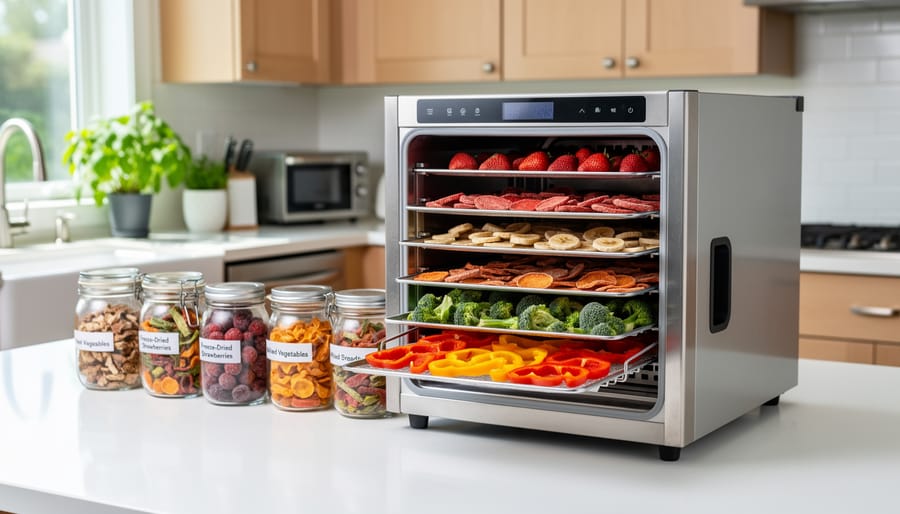
Choosing Between Freeze Drying and Traditional Freezing
Traditional freezing works beautifully for many foods and requires minimal equipment, just a reliable freezer. It keeps produce fresh for months and suits berries, blanched vegetables, and items you’ll use relatively quickly. However, frozen foods need constant electricity, take up freezer space, and can suffer texture changes when thawed.
Freeze drying shines when you want maximum shelf life without refrigeration, making it ideal for emergency preparedness, backpacking meals, or preserving bumper harvests when freezer space runs out. The texture stays closer to fresh, nutrients remain intact, and properly stored freeze-dried food lasts years at room temperature, dramatically reducing energy consumption over time.
For food planning focused on sustainability, consider your energy access and storage capacity. Freeze drying demands upfront investment but pays dividends in reduced waste and energy use. Traditional freezing suits everyday preservation, while freeze drying excels for long-term storage and seasonal abundance. Many households use both methods strategically, and understanding options like freeze drying vs dehydrating helps you match the preservation method to each harvest’s needs.
Important Safety and Quality Considerations
Start with clean produce, always. Thoroughly wash all fruits and vegetables under running water before slicing, even if you plan to peel them. Dirt, pesticides, and surface bacteria can contaminate your final product if you skip this step. Pat everything dry with clean towels or let air-dry before loading trays, since excess surface moisture extends drying time and wastes energy.
Watch for spoilage signs before you begin. Bruised, moldy, or overly soft produce won’t magically improve through freeze drying. In fact, the process concentrates whatever you start with, good or bad. Use only fresh, high-quality fruits and vegetables at their peak ripeness. If you wouldn’t eat it fresh, don’t freeze-dry it.
Proper moisture removal is everything. When your cycle finishes, test a few pieces by breaking them in half. They should snap cleanly with no soft or spongy centers. If any moisture remains, run another cycle. Store finished food only after it has cooled completely to room temperature, then seal immediately with oxygen absorbers to lock out humidity.
Some foods may not freeze-dry well or pose safety concerns. High-fat items like avocados and nuts can turn rancid quickly. Very sugary fruits may stay sticky rather than crisp. Chocolate-covered or butter-coated foods generally fail. Stick to whole fruits, vegetables, and lean proteins until you gain experience.
Respect your equipment. Freeze dryers run cold and use vacuum pumps, so keep hands clear during operation. Never open the chamber mid-cycle unless the manual specifically allows it. Place your unit in a well-ventilated space away from living areas, as pumps can release warm, moist exhaust. Clean trays and seals after every batch to prevent cross-contamination.
Label everything with the date and contents. Even perfectly dried food degrades over time, though much slower than fresh or frozen equivalents. Stored correctly in airtight containers with oxygen absorbers, most freeze-dried produce lasts 10 to 25 years. Check periodically for any signs of moisture, off-odors, or discoloration, and discard anything questionable.
Step-by-Step: Freeze Drying Your Produce
Preparing Your Fruits and Vegetables
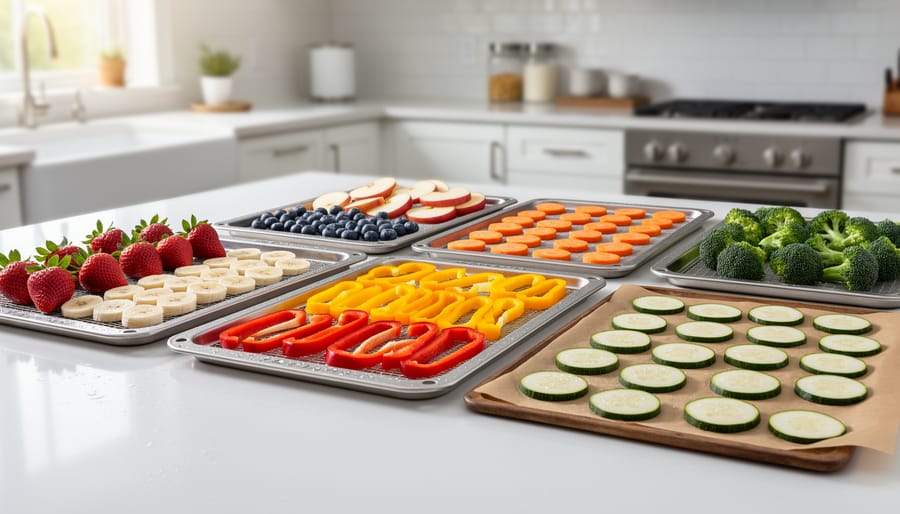
Getting your produce ready for freeze drying sets you up for quality results. Start by washing everything thoroughly under cool running water, even if you grew it yourself. Use a soft brush for firmer fruits and vegetables like apples or carrots. Pat everything dry with clean towels, excess surface water can extend drying time unnecessarily.
Peeling is optional for most produce. Leave skins on berries, grapes, and thin-skinned fruits. For apples, peaches, and root vegetables, peeling creates a more uniform texture, but keeping skins on preserves fiber and nutrients. Choose what works for your planned use.
Size matters here. Cut produce into uniform pieces, typically quarter-inch to half-inch slices or cubes. Smaller pieces dry faster and more evenly. Berries can stay whole if they’re small; larger strawberries should be halved or quartered. Remove pits, cores, and seeds as needed.
Pre-treatment prevents browning and improves quality for certain foods. Dip light-colored fruits like apples, pears, and peaches in lemon juice diluted with water (one tablespoon per cup) for two minutes. Blanch vegetables like green beans, broccoli, and corn in boiling water for one to three minutes, then plunge into ice water. This step deactivates enzymes that cause flavor loss during storage. Drain thoroughly before loading trays. Tomatoes and most berries need no pre-treatment at all.
Loading and Operating Your Freeze Dryer
Once your produce is prepped, it’s time to load the trays and fire up your freeze dryer. This is where careful arrangement pays off in both results and energy efficiency.
Space your produce pieces about half an inch apart on the trays. Crowding them together blocks airflow and extends drying time, which wastes energy and can lead to unevenly dried batches. If you’re working with different types of produce, group similar items together, dense fruits like strawberries take longer than delicate herbs, so dedicating one tray to each keeps the process efficient.
Stack your trays in the freeze dryer, leaving the densest items toward the bottom where airflow is strongest. Most home models accommodate four to six trays, but running a partially full load uses nearly the same energy as a full one, so wait until you have enough produce to maximize each cycle.
Select your cycle based on what you’re drying. Most freeze dryers offer automatic settings that adjust temperature and vacuum levels as needed. A typical cycle for fruits runs 20 to 40 hours, while denser vegetables might need up to 48 hours. Your machine will signal when it’s done, though checking a few pieces before unloading never hurts.
During the cycle, you’ll hear the vacuum pump running and see frost forming on the chamber walls, that’s moisture leaving your food. Resist opening the door mid-cycle. Breaking the vacuum wastes energy and forces the machine to start over.
To minimize your environmental impact, run batches overnight when electricity demand is lower in many regions. Group multiple harvests together rather than running small loads throughout the week. The upfront time investment is significant, but one well-planned cycle preserves months’ worth of produce while keeping your carbon footprint modest.
Packaging for Long-Term Storage
Once your freeze dryer finishes, resist the urge to package everything immediately. Let the food cool to room temperature first, warm produce will create condensation inside containers, reintroducing the moisture you just spent hours removing. This usually takes 15 to 30 minutes.
Before sealing anything, do a quick conditioning check. Place a small batch in a jar for 24 hours and watch for condensation on the glass. If you see moisture forming, the food needs another cycle. This simple test catches under-dried pieces that could spoil an entire batch.
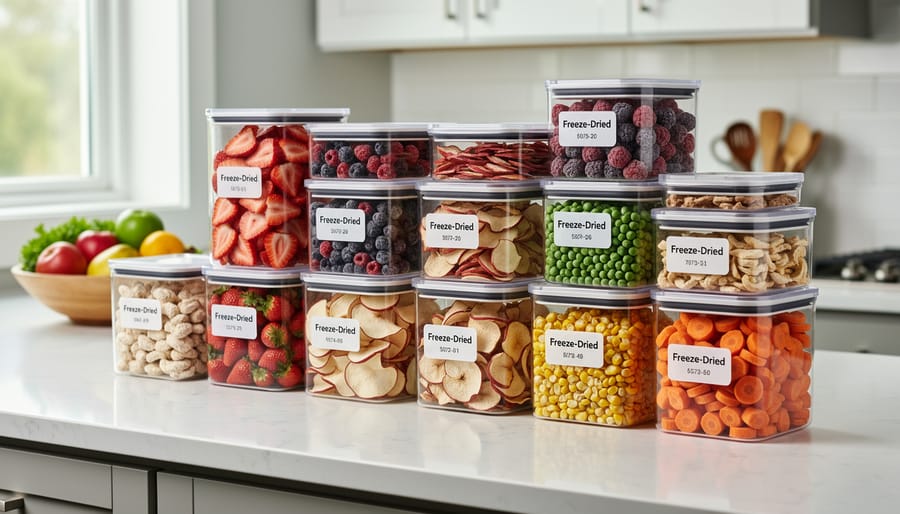
For containers, glass jars with tight-fitting lids work beautifully and last for years. Mason jars are a classic choice, sustainable, reusable, and widely available. If you prefer something lighter for emergency kits or camping supplies, look for BPA-free plastic containers specifically designed for food storage. Whatever you choose, make sure it seals completely. Air is your enemy here.
Oxygen absorbers take your storage to the next level. These small packets remove residual oxygen from sealed containers, preventing oxidation and extending shelf life from months to years. Drop one packet into each jar before sealing. You can find them at most home canning suppliers, and they’re surprisingly affordable when bought in bulk through community co-ops.
Labeling matters more than you think. Write the contents, the date processed, and any rehydration notes directly on the container or on a piece of tape. Your “obviously strawberries” might look suspiciously similar to dried tomatoes six months from now. Store everything in a cool, dark place, a pantry shelf works perfectly. Properly packaged freeze-dried food stays good for 15 to 25 years.
How to Know Your Food Is Properly Freeze Dried
The “snap test” is your most reliable way to verify proper freeze drying, and it’s exactly what it sounds like. Take a piece of freeze-dried fruit or vegetable and break it in half. It should snap cleanly with a crisp sound, almost like breaking a cracker. If it bends instead of snapping, or feels leathery or spongy, moisture remains and it needs more drying time. Properly dried produce should be rock-hard throughout, with no soft or pliable spots.
Beyond the snap test, look for these signs of successful freeze drying:
- Uniform texture throughout each piece, with no darker or softer areas
- Light weight, most produce loses 90-95% of its water weight
- Vibrant color retention similar to fresh (not brown or significantly darkened)
- No condensation forming inside storage containers after 24 hours
- Brittle, chalky texture that crumbles easily when pressed
If your batch fails these tests, don’t toss it. Simply run another freeze-drying cycle or spread pieces on trays in a food dehydrator set to low heat for a few hours. Testing small batches first lets you learn your equipment’s quirks without risking large quantities of produce.
Properly freeze-dried food stored with oxygen absorbers in airtight containers maintains quality for 25+ years at room temperature, making it one of the most effective ways to reduce food waste from seasonal harvests. Check stored food periodically during the first month, if you notice any moisture or softness developing, the batch wasn’t fully dried and should be used within a few weeks instead.
What to Do With Your Freeze-Dried Harvest
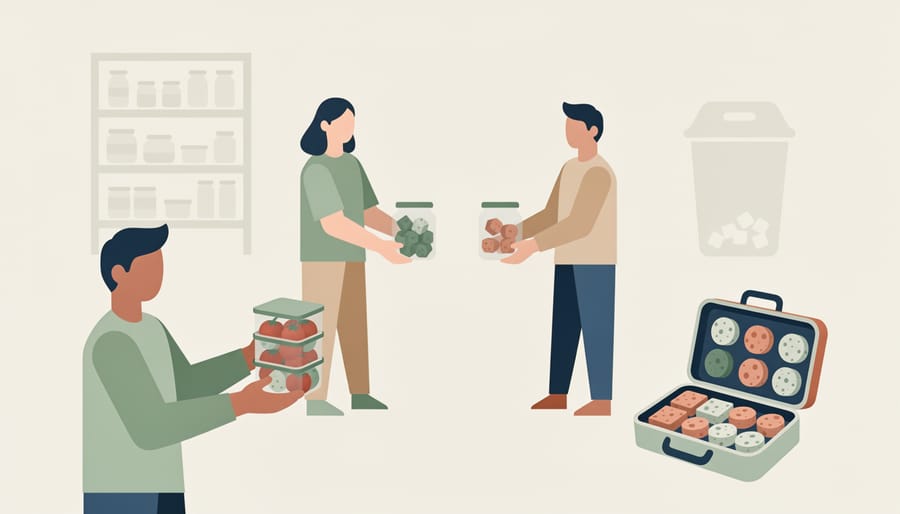
Once your fruits and vegetables are properly freeze dried, you have a versatile pantry staple that opens up numerous possibilities. The lightweight, shelf-stable nature of freeze-dried produce makes it ideal for both everyday cooking and long-term planning.
For daily meals, rehydrate your produce by soaking it in water for 5-15 minutes, depending on thickness. Freeze-dried berries plump up beautifully in smoothies or oatmeal, while vegetables work perfectly in soups, stews, and casseroles. You can also eat many fruits straight from the jar as crunchy snacks. Understanding the dehydrating differences helps you choose the best preservation method for each intended use.
Building an emergency food supply is another practical application. Freeze-dried produce stays nutritious for years when properly stored, providing peace of mind during power outages or supply disruptions.
Consider the community impact, too. Many local food banks welcome donations of preserved foods, and sharing your harvest helps reduce food insecurity. Check whether your area has food preservation workshops where you can learn alongside neighbors, or explore equipment-sharing programs that make freeze drying more accessible. These collaborative efforts strengthen local food systems while reducing waste, turning your kitchen project into meaningful community action that extends the sustainability benefits well beyond your own household.
Common Questions About Freeze Drying at Home
Is freeze drying really worth the cost for home use?
The upfront investment in a home freeze dryer typically ranges from $2,000 to $3,500 for entry-level models in 2026, which feels steep at first glance. But when you calculate the savings from preserving seasonal produce bought at peak freshness (often pennies per pound), reducing grocery waste, and avoiding the ongoing energy costs of freezer storage, many families break even within two to three years. If you’re not ready to purchase, look into community equipment-sharing programs or local sustainability groups that may offer access to freeze dryers for a small membership fee or hourly rental.
How much time does freeze drying actually take?
A typical freeze-drying cycle runs 24 to 40 hours depending on the moisture content of your produce and the size of your load, but here’s the good news: most of that time is hands-off. You’ll spend maybe 30 minutes to an hour prepping and loading your fruits and vegetables, then the machine does the work while you go about your life. The active involvement comes at the beginning and end, making it far less labor-intensive than canning or dehydrating, where you need to monitor throughout the process.
Which fruits and vegetables work best for beginners?
Start with berries, sliced apples, corn kernels, and peas, they freeze dry quickly, rehydrate beautifully, and give you immediate confidence. Avoid high-fat items like avocados or very watery produce like watermelon until you’ve got a few batches under your belt.
How does freeze drying compare to regular freezing for sustainability?
Freeze drying uses more energy upfront but eliminates the need for continuous freezer storage, which draws power 24/7 for months or years. Once processed, freeze-dried food stores at room temperature for decades, making it ideal for seasonal preservation without long-term energy costs.
Can I really do this if I’m completely new to food preservation?
Absolutely. Freeze drying is actually more forgiving than canning because there’s no risk of botulism or pressure-cooker mishaps. Modern home units have preset cycles that handle the science for you, so if you can slice fruit and press a button, you can freeze dry successfully.
What about the learning curve?
Your first batch might feel uncertain as you figure out optimal slice thickness and loading patterns, but most people nail the basics by their second or third run. The verification methods you learned earlier, like the snap test, give you clear feedback, so you’ll know immediately whether you’ve succeeded. Join online forums or local workshops to learn from others’ experiences, and remember that even imperfect batches are often perfectly edible, just maybe not optimally crispy.
Freeze drying fruits and vegetables at home is more than just a preservation technique, it’s a tangible way to reduce food waste, shrink your ecological footprint, and build a more resilient food system. By transforming seasonal harvests into shelf-stable nutrition, you’re keeping perfectly good produce out of landfills while cutting down on refrigeration energy and excessive packaging.
Starting small makes perfect sense. Try a single batch of berries or a few trays of zucchini before scaling up. You’ll quickly learn what works in your kitchen and build confidence with the process.
You don’t have to do this alone. Many communities are launching freeze dryer sharing programs where neighbors pool resources and swap tips. Local food preservation workshops offer hands-on learning and the chance to connect with others who share your commitment to sustainability. These collaborative efforts make the technology more accessible while strengthening community bonds around shared values.
Every piece of freeze-dried produce represents food saved, energy conserved, and a small victory against waste. Whether you’re preserving your garden’s bounty or rescuing discounted produce from the store, you’re taking meaningful action. Start today, share what you learn, and watch how one small step ripples outward into lasting change.